|
|
Dear Colleagues, dear Friends!
Animals learn extraordinarily quickly to behave autonomously and intelligently in an environment suited to them. Humans are far less efficient and need many years to do so: This gives them a decisive advantage: If they choose, they can learn throughout their lives and become increasingly autonomous and intelligent.
Animals alter their environment only minimally to create a habitat suitable for themselves. Through their work, humans can create a culture and a civilization that enable them to increasingly foster their own development. However, this advantage carries a risk: through their work, humans can destroy nature and society.
Learning and working are what make us human. Learning and working are also the central tasks of schools and kindergartens. Learning and working are no longer taken for granted today, and so we as teachers must continually ask ourselves how we can shape the forms of learning and work in school so that they are in keeping with the times.
«For Learning and for Work»: This is the theme of the upcoming World Teachers’ Conference, for which we have chosen as the title a quote from the morning verse for middle and high school students.
In this newsletter, you will find an article on the conference theme, a note about an e-book published by the Pedagogical Section: «Learning to Be in the World», a contribution to our study «Resilience and Pedagogy», the 2025 Annual Report, new articles on Waldorf Resources, and event announcements such as the Conference for Health and Education (Learning Support), which we are organising in October.
With warm regards from
the Pedagogical Section at the Goetheanum
|
|
|
|
|
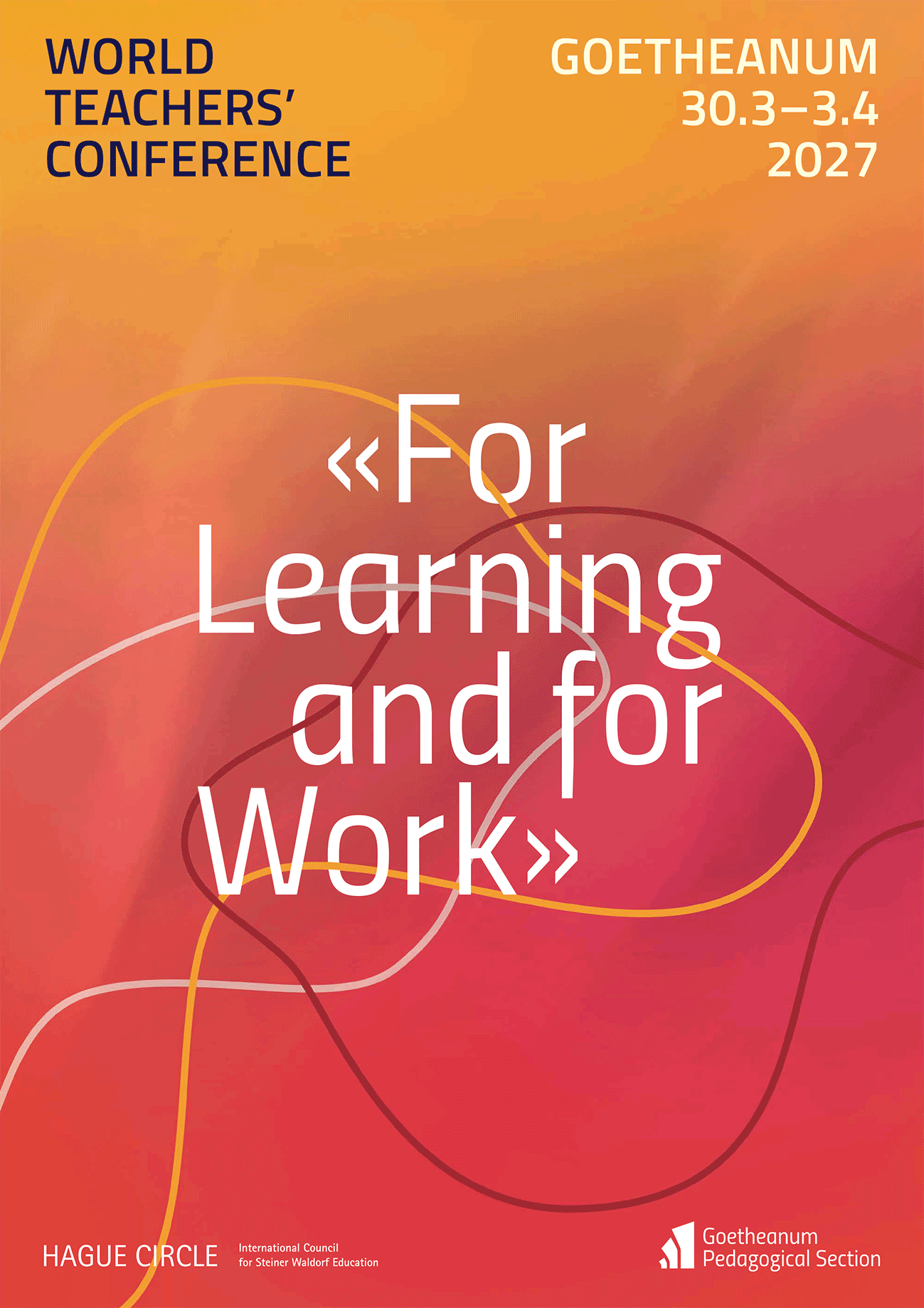
World Teachers' Conference 2027
– «For Learning and for Work»
The theme of this conferene reflects the very essence of school life: Learning: weaving into what is there, into what precedes us, what we long for and connect with when we are born. Working: transforming the existing world through active participation, by imprinting ourselves into world events and self-becoming in this process.
Why are we in school day after day? We remind each other of this – children, young people, teachers – «…for learning and for work».* The life of the school. Learning and working are elementary tasks of humanity. Expanding our understanding and knowledge of the world and shaping our shared reality are the foundations for this. They form the substance of destiny in adult life. The school of life.
Being a teacher brings both dimensions together. Life in school becomes a school of life, where pedagogical practice and knowledge of the world have to come together and permeate each other. The school of life and responsible world citizenship legitimate our teaching and enable us to tell the children and young people every day: this is the world that we share.
During the conference we will share and deepen, with colleagues from around the world, these dimensions of being teachers, of being teachers in the world and of the world. Rudolf Steiner did not tire to emphasize these dimensions in the pedagogical courses he gave in England, for without this task there is no school. School is a place where learning and work, participation and transformation have always been practised and lived.
About the conference:
Technological developments and artificial intelligence give rise to existential questions about learning and work, social responsibility and responsibility towards nature. Scientists, pedagogues and socially and politically committed speakers will address these topics. Questions arising from the lectures will be discussed in open conversations.
One of the central questions concerns lesson preparations today. What parts do artificial intelligence, autonomy and creativity play in this? Preparation means that we learn and work as teachers. This learning and working is currently also called into question. This is why a meditatively deepened understanding of the human being and collegial working are so essential to support our pedagogical practice. Class lessons will be held for members of the School of Spiritual Science. Alternatively, there will be an introduction to the Class lessons for those who don’t know this meditative path of knowledge yet that Rudolf Steiner founded for the School of Spiritual Science.
There will be guided tours of the Goetheanum building and campus, lectures and research reports, examples of best practice and concerts presented by young people from France and Latvia, by musicians from Norway, Argentina and Switzerland and eurythmy performed by the Goetheanum Eurythmy Ensemble among others. On 30 March, the day of Rudolf Steiner’s death, all are invited to a commemorative gathering.
The programme will go out at the end of August and online registration will be open from mid-September.
The Pedagogical Section at the Goetheanum and the Hague Circle - International Council for Steiner Waldorf Education invite you warmly to the Twelfth World Teachers’ Conference. This conference is professional development as well as a shared mutual reminder of our chosen task: to work and to learn!
* From the morning verse given by Rudolf Steiner to the teachers. Cf. Faculty Meetings with Rudolf Steiner, Volume 1, 1919-1922. Hudson NY 1998. Translated by R. Lathe and N. Parsons Whittaker. Meeting of 26 September 1919.
|
|
|
|
|
Annual Report of the Pedagogical Section
«Learning in difficult times» – this theme, chosen for a colloquium, could serve as the motto for the whole of the 2025 working year.
|
|
|
|
|
|
|
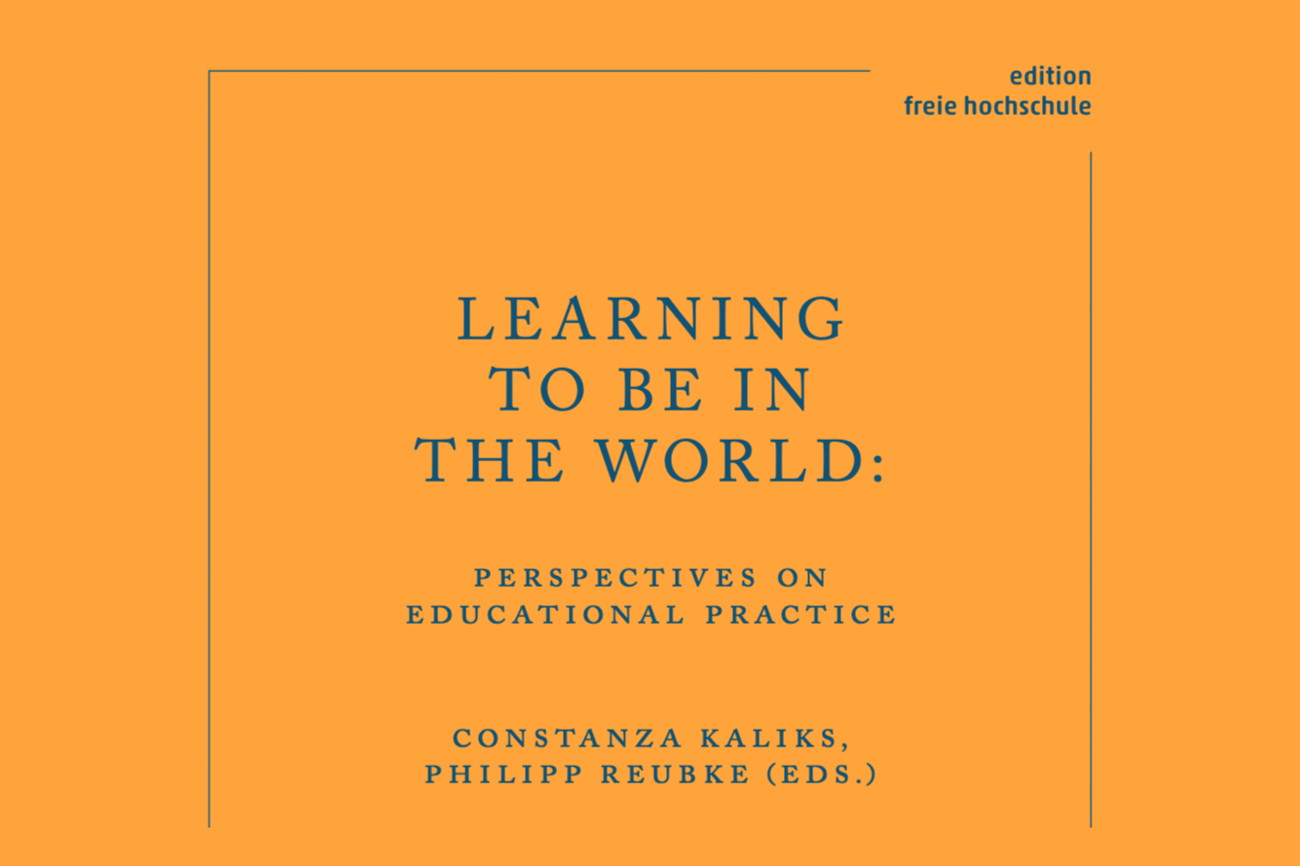
«Learning to Be in the World»
This book by Constanza Kaliks and Philipp Reubke brings together inspiring contributions from international educators and academics who address one of the most fundamental questions: What is a human being – and what does this understanding mean for education and upbringing? The authors combine the latest scientific findings with practical experience from Waldorf education, opening up new perspectives on learning, development and cultural diversity.
The focus is on the uniqueness of the child, the importance of movement, play and sensory experiences for sustainable learning, and the responsibility of schools and education in a changing world. The contributions encourage us not to reduce human beings to measurable achievements, but rather to consciously support and foster their individual development.
NEW: You can now download the e-book in English as a PDF – simply purchase it directly from the Pedagogical Section’s website. Price for e-book: 16.80 CHF/EUR.
|
|
|
|
|
|
|
«Echoing Giants, Stepping Toward the Unknown»
In this article, study author Belle Leung describes how her long-term study, «Resilience and Education», has reached a new milestone: the journey from a carefully crafted questionnaire to receiving «ethical approval» from Maastricht University.
|
|
|
|
|
|
|
|
|
|
New contributions on Waldorf Resources
|
|
|
|
|
|
|
|
|
|
|
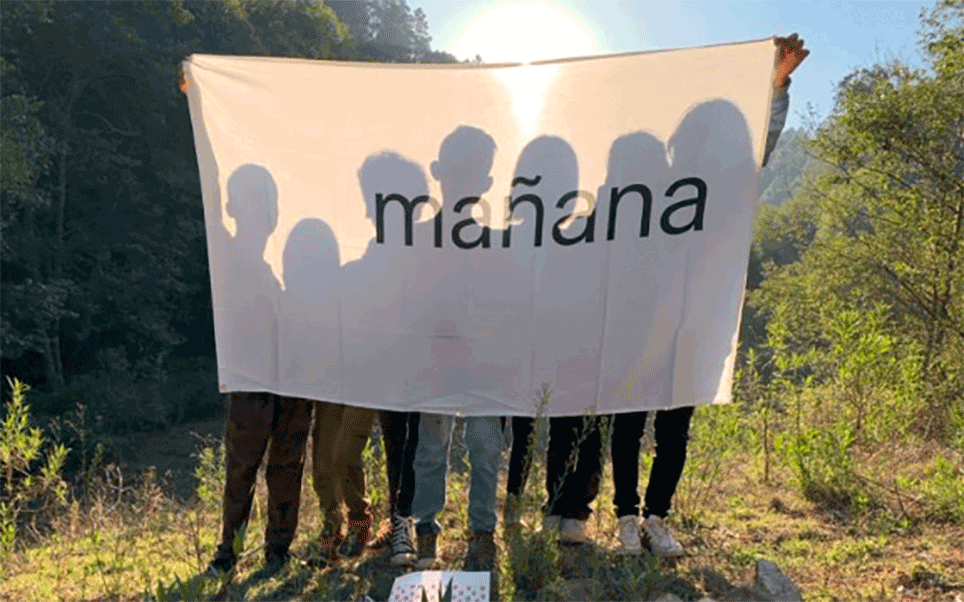
«VISIONS FOR tomorrow»
A single idea can bring about change!
Constant exposure to war, displacement, violence, and climate change creates feelings of helplessness and a lack of hope. This leads to lethargy and pessimism – not only among adults, but especially among young people.
Christian and Corinna Boettger, both passionate Waldorf teachers, are now putting a stop to this lethargy and pessimism. By participating in their project «VISIONS FOR tomorrow,» young people are encouraged to articulate positive visions of the future, hopes, and wishes, and to engage in dialogue with one another.
The vision:
Every change begins with an idea. When you work together at your Steiner Waldorf school, institution, or youth group to develop visions for tomorrow, and participants weave their voices, dreams, and creative ideas into a vibrant network, a global consciousness can grow and become a reality – for a shared world of tomorrow.
How does the project work?
1: You are a Steiner Waldorf school, institution, or youth group. Send an email to the organizing team. Let them know the size of your group and what the word «tomorrow» is in your native language.
2: The organizing team will have a white flag made with the word «tomorrow» in your native language. They’ll send it back to you along with informational materials and a surprise package (including quartz crystals, among other things). Your participation in the project is now binding.
3: Exchange and brainstorming in the schools/institutions/groups
4: The schools/institutions/groups erect a flagpole with the printed flag. Each participant places a quartz crystal in the ground along with their personal visions for the future. Then the flag is raised.
5: Documentation by the participants and publication on the VISIONS-FOR-tomorrow website, in museums, and at cultural forums around the world.
Participation in the project is intentionally kept simple and costs you nothing. The project is scheduled to take place simultaneously around the world over a period of three to four weeks.
«VISIONS FOR tomorrow» is supported by the nonprofit organization «Visions for Tomorrow e.V.». This project was inspired by the art project created by artist Maurits Boettger.
|
|
|
|
|
|
|
|
|
|
|
|
|
|
|
|
|
|
|
March 30 - April 3, 2027:
|
|
|
|
|
|
|
|
|
Sign out
Copyright © 2020 Allgemeine Anthroposophische Gesellschaft. All rights reserved.
|
|
|
|
|